Building Visual Identity
Craig Wheeless of Rainy Day Designs has played a significant role in shaping the visual identity of the Roaring Fork Valley. Through his work creating and developing brands for countless businesses, organizations, individuals, and schools, Craig has helped give the valley a visual language all its own. It’s only fitting to recognize him as someone who has quite literally left his mark on how this place sees — and presents — itself.
You’ve been creating and building brands in Carbondale for decades now, and have had a hand in projects that have become part of Carbondale’s visual identity. What is it about this community—its people, history, and creative spirit—that has continued to inspire your work here? Also, what makes a design move beyond simply being a logo or image and become something that people feel belongs to a community?
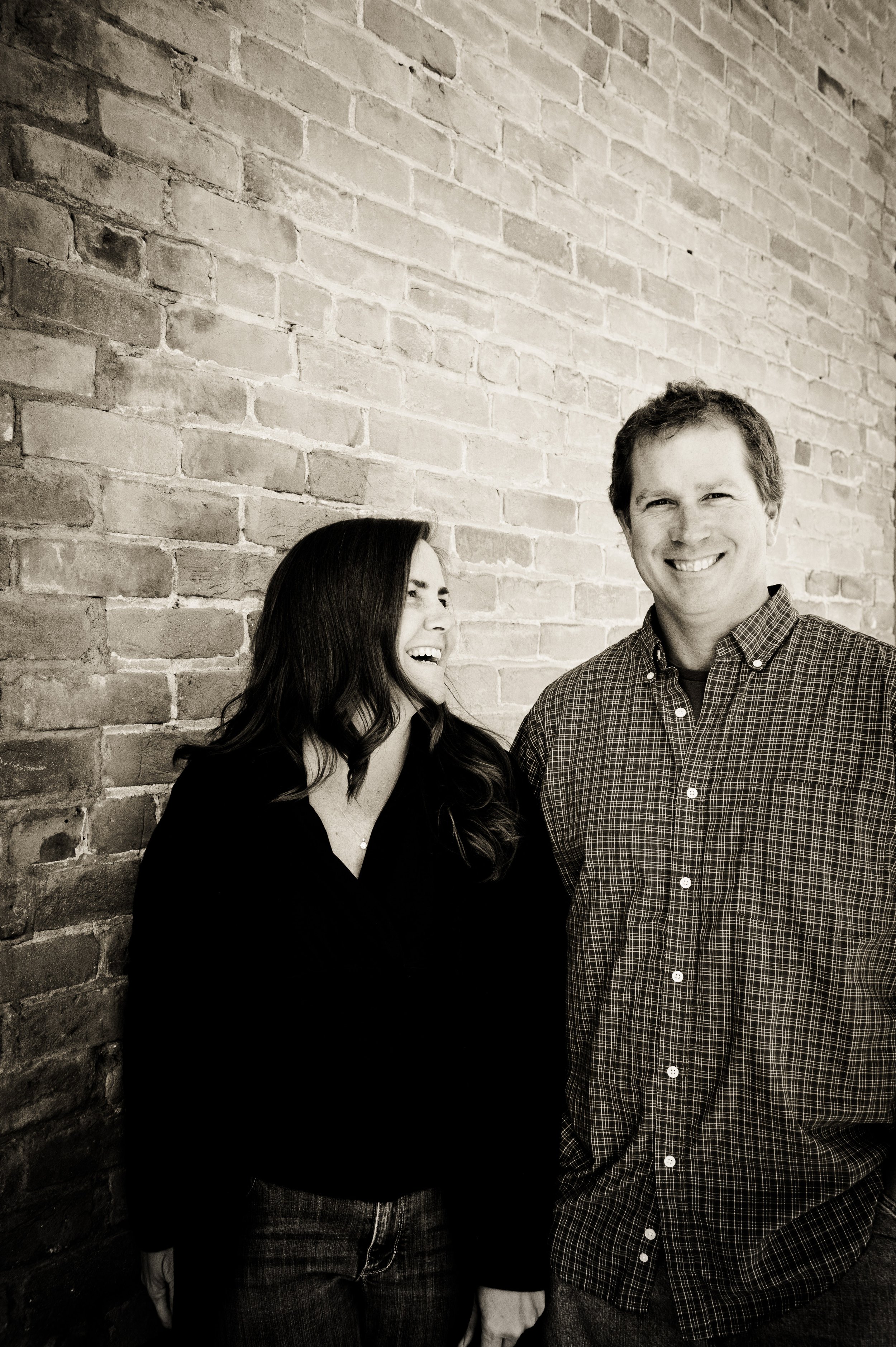
Erin Rigney and Craig Wheeless
“Yeah, we've had a hand in a lot of brand identities around Carbondale over the years. Decades…really?? — damn, I feel old saying that.
What we've noticed is that the Roaring Fork Valley just attracts creative, resilient, respectful people. We've been lucky to work with so many of them, and honestly none of this happens without a lot of hands on deck. Most of all my business partner and wife, Erin Rigney — we balance each other out in ways that still surprise me. And we've been fortunate to work alongside some seriously talented people in this valley: Stanley Bell, Jen Moss, Rachel Braudis, Lindsay Jones, Larry Day, Laura Stover and Brian Colley.
My take is that the business should define the identity — not the designer. We've been at this a long time, and when we first started out, we honestly thought we knew how to design a logo. What we actually learned from working in Carbondale is that these businesses are extensions of the people who run them — unique, creative, thoughtful, sometimes a little wacky people who make up this community. Really Listening to how people talked about their goals and values was an education we needed back before Y2K, and honestly still lean on now. The process hasn't changed much: clients share their vision, and we shape how the world sees it.
A good design can anchor to a place the same way a building does. We've always believed the personality of an organization has to come through — something people can actually feel — and chasing that down is what still makes this job feel fresh.”
Can you share a community project that has been particularly meaningful to you—one where you felt art and design genuinely brought people together, sparked conversation, or helped create a stronger sense of place?
“Honestly, it's hard to pick just one — we've gotten to be part of so many incredible projects and fundraising campaigns over the years, for needs all over our valley, our town, and even beyond. We feel really lucky to partner with the nonprofits and schools we work with.
There are too many to narrow down to a single favorite, but a few local ones that come to mind are the Valley View Hospital Foundation campaigns, the brand work we did for the Third Street Center, the capital campaign for Response in Basalt, and honestly anything we've gotten to do with local schools — bond ballot initiatives, playground builds, senior sports banners, that kind of thing. Teachers are the unsung heroes. The long hours they put in, their kindness, and how they stay focused on kids despite all the admin crap they have to do — it’s impressive!”
How do you approach a project when the goal isn’t simply to “make something beautiful,” but to help an organization or community articulate who they are and what they value?
For me, the beauty in design comes out of solving the actual problem, taking something complicated and making it make sense, giving it some personality through type, and thinking about what actually resonates with the community — all while everyone's already drowning in stuff competing for their attention. Really it comes down to listening first. Then we can map out how to best implement their communication plan.”
There’s something powerful about seeing a sign, logo, poster, or piece of artwork that has been around long enough to become part of a place’s collective memory. What do you think gives a visual identity staying power—and how do you create something with the possibility of standing the test of time?
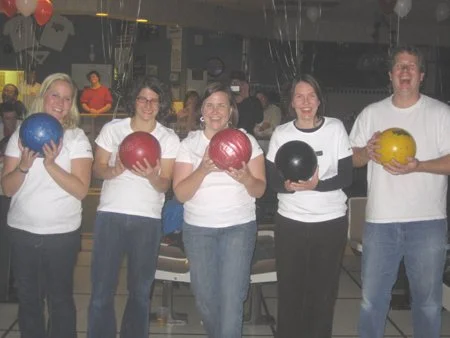
Celebrating 10 years of Rainy Day Designs in 2008.
“Honestly, everything we build, we want it to last for decades — that's just how I think about it. Business owners work hard for their money and stretch every dollar they can, so the least we can do is respect that and try to live up to it. I also can't stand the inefficiency of waste. If we can reuse something and save part of the budget, that frees up money for stuff that actually matters long-term — real strategic work, not just filling space.
Beyond that, the style of a piece says a lot about who the organization is. Picking the right style — one that actually fits the business (not just a trend or AI) — isn't a small decision, it's kind of the whole game. And I think we're lucky here in our valley. There are a lot of designers who genuinely go out of their way to infuse style into the work instead of playing it safe. Because of that, businesses that care about good design end up getting branding that's a level above what you'd expect from a town this size.”
Throughout your career, what have you learned about the relationship between longevity and relevance? If you think about Carbondale 20 years from now, what role do you hope art, design, and creative collaboration will play in preserving the character of this community—and what would you love to see the next generation of creators carry forward?
“It's worth noting — 20 years ago, we'd be working late in the Dinkle Building, and I'd take a lap around the block just to stretch my legs. I could stand in the middle of Main and 4th Street because there wasn't a car in sight. Honestly, that still happens today, especially on Sunday nights (although I try not to work as late now!!). I bring it up because as much as things change, so much stays the same. We live in a small town, and we look out for each other. We genuinely care more about the collective than the individual.
That's really the core of good design — people. Everything we do comes back to people. And because we're always changing as people, the work has to keep evolving with us, always circling back to what people actually need.
I honestly couldn't tell you what's coming next. But I know this: artists and creatives will be right up front, leading the way, making sure we're taking care of each other along the way.”
Find Craig at craig@rainydaydesigns.org